BBATHE BRITISH
BLOCKCHAIN
ASSOCIATION
Membership →

POLICY & PARLIAMENT

Evidence for better policy. Dialogue for better decisions.

BBA educates policymakers and works with Parliament, regulators, government, academia and industry to support informed policy on blockchain, digital assets and distributed ledger technologies.
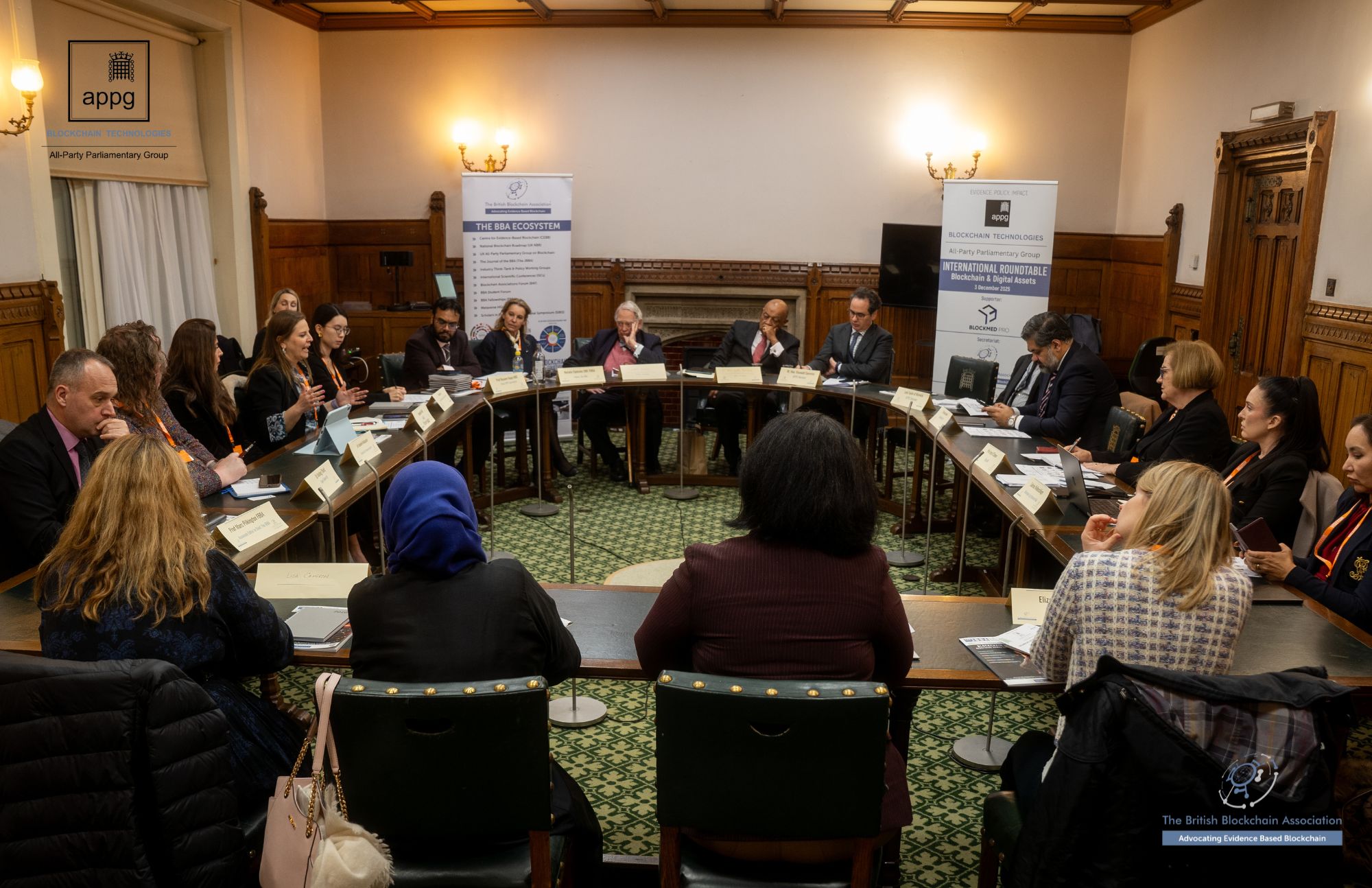
Parliamentary roundtable on blockchain and digital assets · 3 December 2025

OUR APPROACH

Independent, evidence-led and focused on public value.

Our policy work connects technical evidence with practical experience. We convene parliamentarians, policymakers, researchers and industry leaders to examine where blockchain can create measurable value, where risks need to be addressed and where the UK can build long-term institutional capability.

The objective is not advocacy for technology for its own sake. It is better-informed decision making.

POLICY ADVOCACY · EDUCATION

Educating policymakers

Education is a core part of the BBA’s policy advocacy work. We help policymakers understand blockchain and digital assets so they can assess the evidence, examine the risks and make better-informed decisions.

As Secretariat to the APPG on Blockchain Technologies, the BBA delivered a Blockchain & Crypto for Policymakers Masterclass for UK legislators. In her feedback, Baroness Vere of Norbiton said she attended every session and that the programme helped her understand this complex area.

Explore our parliamentary work →
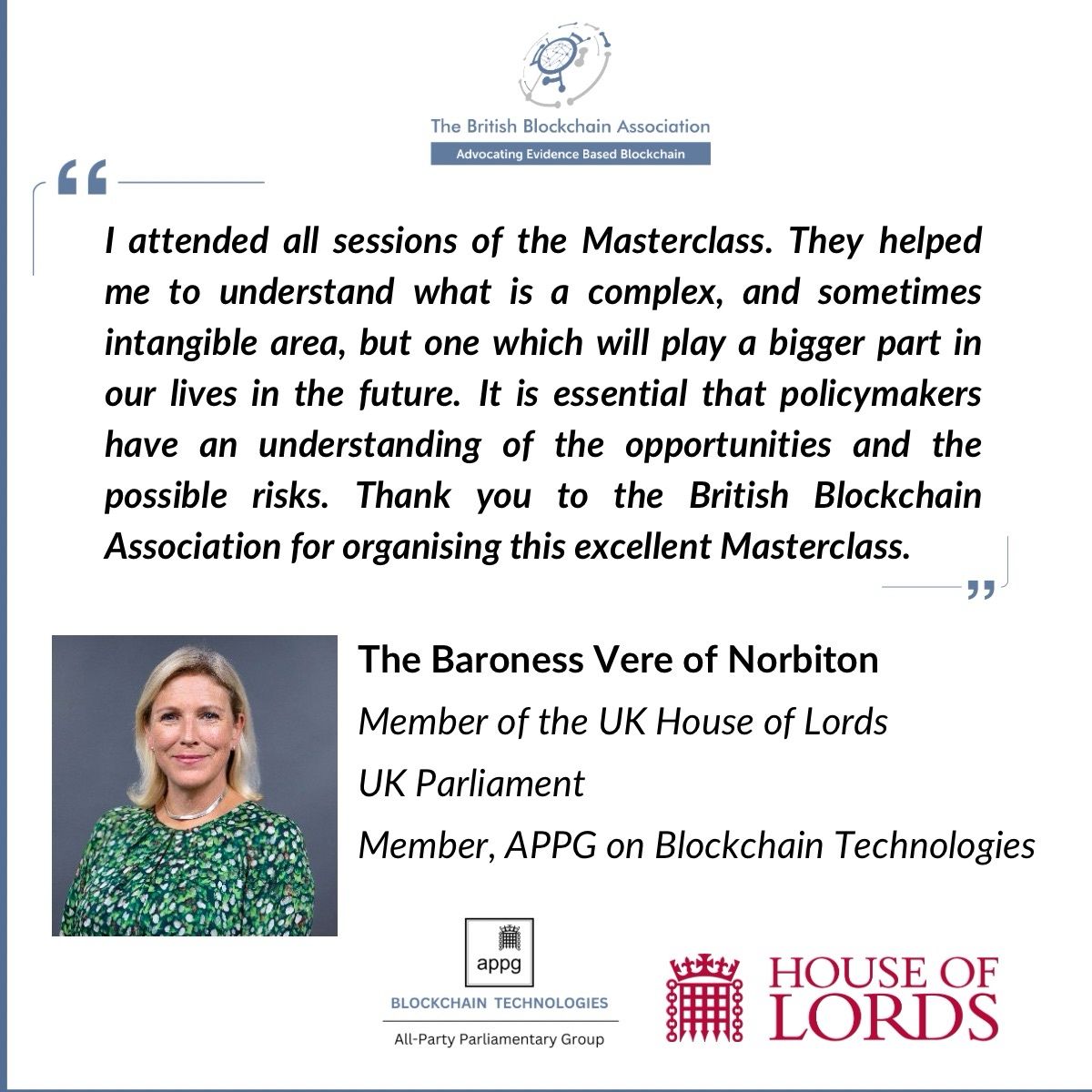
Full feedback banner with a photograph of Baroness Vere of Norbiton. She says attending all BBA masterclass sessions helped her understand blockchain and thanks the BBA for organising the programme.
View full-size banner ↗ · Original BBA post ↗
Read Baroness Vere’s feedback
I attended all sessions of the Masterclass. They helped me to understand what is a complex, and sometimes intangible area, but one which will play a bigger part in our lives in the future. It is essential that policymakers have an understanding of the opportunities and the possible risks. Thank you to the British Blockchain Association for organising this excellent Masterclass.

Baroness Vere of Norbiton

Policy & Parliament · 2026

13 policy advocacy domains

The BBA’s policy advocacy and working groups span the blockchain economy, from skills and public services to tokenisation, governance and emerging technologies.

Download policy domains 2026 (PDF) ↗Aligned with the UK NBR 2030 and APPG workstreams
01Blockchain: Skills, Talent, Jobs and Workforce Planning
  • Web3 Industry Growth and Workforce Planning
  • Careers in Blockchain and Web3
  • Coders, Programmers and Developers of Blockchain
  • New Employment Opportunities in Blockchain Industry
  • Blockchain Sandboxes, Pilots and Incubators
  • International Cooperation and Coopetition in Web3
  • In-Demand Blockchain Skills and Web3 Job Market
  • Start-ups, Funding and VCs
  • Recruitment and Retention of Web3 Talent
  • Making the UK an attractive destination for Web3 jobs
02Decentralised Finance (DeFi) and the Cryptoeconomy
  • Supporting Crypto and Digital Asset Businesses in the UK
  • FCA registration and approval of Crypto Firms
  • Supporting Banking and Financial Services for Crypto Firms
  • Regulation of DeFi applications and platforms
  • Governance of DeFi applications and platforms
  • Auditing Tokenomics
  • Crypto Staking
  • Travel Rules for Crypto Firms
  • Risks, Threats and Opportunities in DeFi for UK Economy
  • Crypto payments: Businesses, Consumers and Regulators
03The Token Economy: Tokenising Real-World Assets (RWA)
  • Tokenising Financial Instruments and Applications
  • CBDCs and Tokenisation of Currencies
  • Stablecoins
  • Policies and Regulations around RWA Tokenisation
  • Tokenising Real Estate
  • Tokenising Commodities
  • Tokenising Arts, Antiques and Music
  • Tokenising Carbon Credits and Environmental Assets
  • Tokenisation and the role of Oracles
04Blockchain for Enterprise, Business, Trade and Supply Chains
  • Blockchain for Business Processes
  • Enterprise Blockchains: Public vs Private
  • Blockchain Education and Training for C-Suite executives
  • Blockchain for Global Trade
  • Blockchain for Supply Chains
  • Consortium Capabilities for Enterprise Blockchain
  • Blockchain for Logistics and Transportation
  • Blockchain for Trade Finance
  • Blockchain-based Project Management
05Decentralised Autonomous Organisations and Web3 Governance Models
  • DAO’s Decentralised Digital Workforce
  • DAO Labour Economics
  • Distributed Governance of Web3 Ecosystems
  • DAO Treasuries
  • DAO Tokenomics
  • DAO Regulation
  • DAO Policymaking
  • DAOs as Legal Entities and Corporations in the UK
06Blockchain Standards, Frameworks and National Roadmaps
  • Implementation of UK National Blockchain Roadmap 2030
  • Establishing the UK as a Centre of Excellence in Blockchain
  • Trans-national Web3 Partnerships
  • Consensus building among stakeholders and BAF
  • Blockchain in Global context: UN SDGs
  • International Blockchain Standards: Benchmarks, Frameworks and Guidelines
07Blockchain and Allied Disciplines: AI, Quantum Computing, IoT, AR and VR
  • Blockchain based AI Applications
  • AI-based Blockchain Applications
  • Post Quantum Blockchains
  • IoT, Smart Cities and Blockchain
  • Blockchain and Genomics
  • Singularity and Emerging Technologies
  • Ethical Challenges in Emerging Technologies
08Education, Research, Development, Think-Tanks and Knowledge Networks
  • Universities and Blockchain Education
  • Universities and Blockchain Research
  • University Incubators and Spin-offs
  • Industry – Academia – Government – Society: The Quadruple Helix
  • Postgraduate Curriculum for Blockchain in the UK
  • R&D Funding for Blockchain and Crypto research
  • Teaching the Teachers: Pastoral support for Web3 Educators
  • Blockchain Journal Clubs and Student Societies
09Diversity, Inclusion, Sustainability and Social Good
  • Diversity, Equity and Inclusion in Web3 Ecosystems
  • Environmental Impact of Web3 applications
  • Blockchain, Social Good and Life Sciences applications
  • The Promise of Web3 for End Users and Consumers
  • Blockchain for SMEs
  • Public awareness of Blockchain and Cryptoassets
  • Blockchain for Sustainability and UN SDGs
  • Blockchain and Crypto payments for Humanitarian Aid
10Smart Contracts, NFTs, IP, Copyrights and Law
  • Smart Contracts and “Smarter” Contracts
  • Intellectual Property Rights and NFTs
  • Copyright Laws of Blockchain-based Creative Industries
  • Tokenomics: Litigation and Legislation
  • Blockchain Analytics, Cyber intelligence and Web3 Platform Surveillance
  • Blockchain Analytics and Evaluation of Web3 Crime
  • Privacy and Zero Knowledge Proofs (ZKPs)
  • Blockchain Arbitration
11Blockchain for Government and UK Public Services
  • Blockchain-enabled Public Services
  • Nurturing Quadruple Helix Blockchain Ecosystems
  • Building Blockchain Centres of Excellence (CoE)
  • Establishing Public-Private Partnerships in Web3
  • Blockchain for e-Voting
  • Blockchain based Decentralised Digital ID (DID)
  • Blockchain based Public and Citizen records
  • Blockchain to tackle Procurement Fraud
  • Blockchain Interoperability among government departments
12Metaverse and Blockchain-based Extended Reality Applications
  • Metaverse for Public Good
  • Cybersecurity in the Metaverse
  • Ethical and Legal Challenges of the Metaverse
  • Digital Twins and e-Government in the Metaverse
  • Native Metaverse Organisations
  • Digital Avatars, NFTs and Tokenomics of Metaverse economies
  • Metaverse for Education
  • Metaverse for Business
  • Metaverse for Entertainment and Arts
13Evaluation and Audit of Blockchain Ecosystems
  • Auditing Societal Impact of Web3 applications
  • Building Sustainable and Energy efficient Blockchain applications
  • Governing Web3: Transparency, Accountability and Quality Assurance
  • Evidence Based Blockchain: Evaluation of Blockchain Programmes
  • Collecting Qualitative evidence for national budgeting processes
  • Collecting Quantitative evidence for national budgeting processes
  • National Guidelines for building Blockchain applications

To contribute to these policy domains and the BBA’s working groups, contact the BBA Secretariat →

PARLIAMENTARY ENGAGEMENT

A direct bridge between evidence and Parliament.

The British Blockchain Association provides the Secretariat to the All-Party Parliamentary Group on Blockchain Technologies, supporting a cross-party programme of roundtables, evidence sessions, field visits and parliamentary engagement.

Visit the APPG →
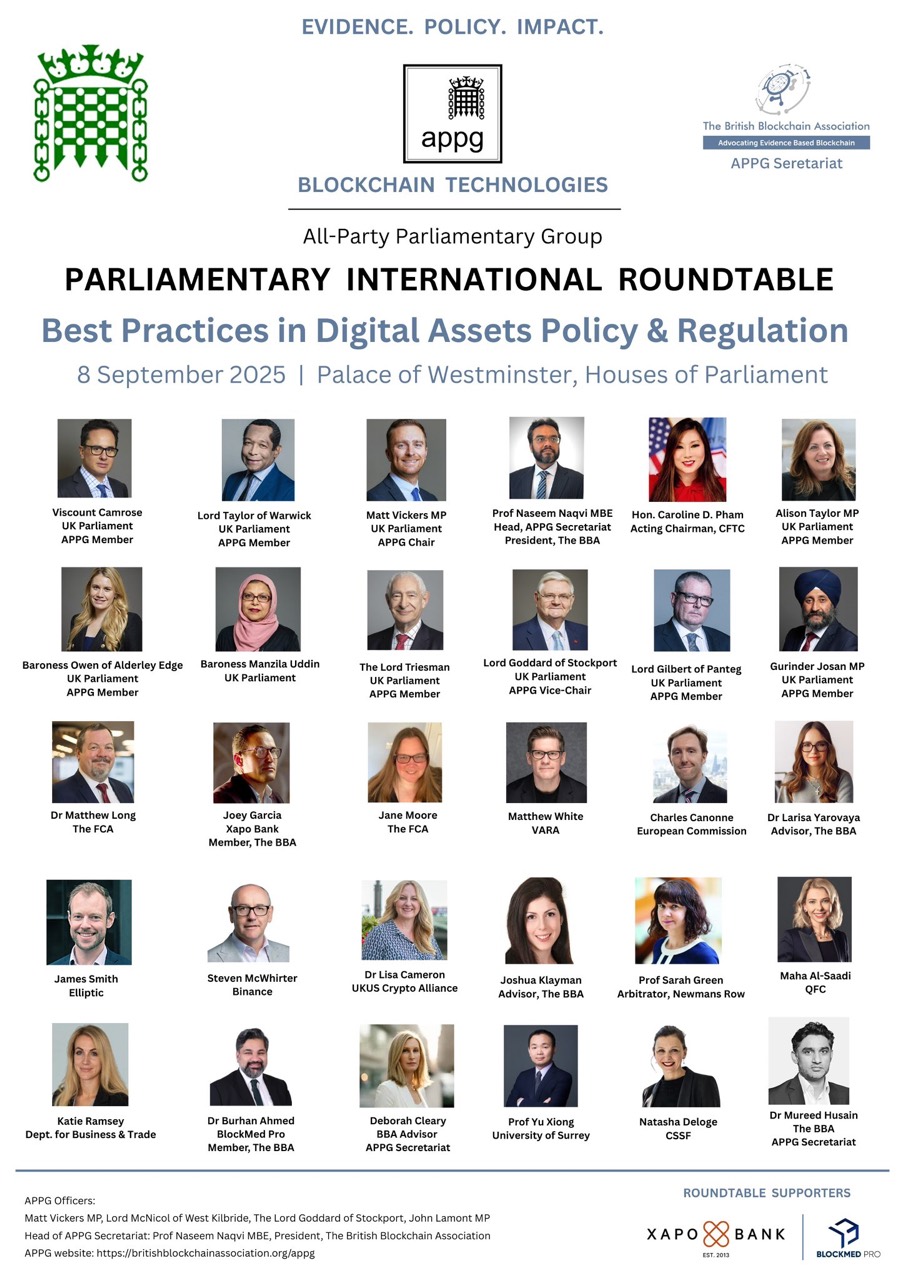
Best Practices in Digital Assets Policy and Regulation — APPG Parliamentary International Roundtable, 8 September 2025, Houses of Parliament; event banner with speakers and participants
UK PARLIAMENTAPPG on Blockchain Technologies
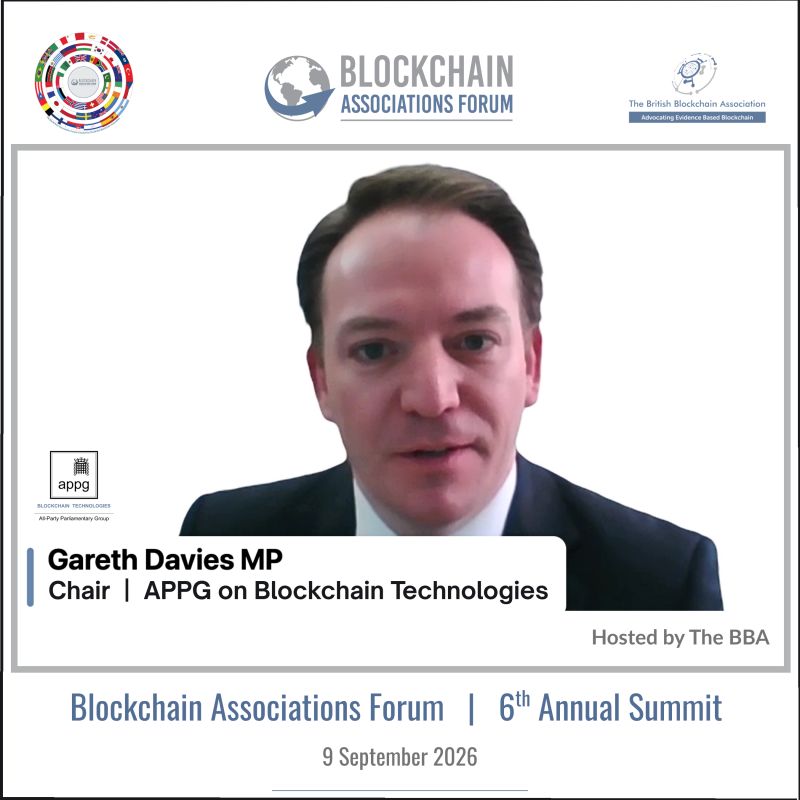
Gareth Davies MP, Chair of the APPG on Blockchain Technologies, speaking at the sixth BAF Summit on 9 September 2026

BAF SUMMIT · 9 SEPTEMBER 2026

Gareth Davies MP: Supporting Blockchain Innovation

Chair of the APPG on Blockchain Technologies at this event

At the sixth Blockchain Associations Forum Summit, hosted by the BBA, Gareth Davies highlighted Britain’s legal, financial and research strengths and the importance of an environment in which innovation, talent and skills can thrive.

“It is vital that we provide an environment conducive to innovation so that talent and skills can thrive in this country in the years ahead.”

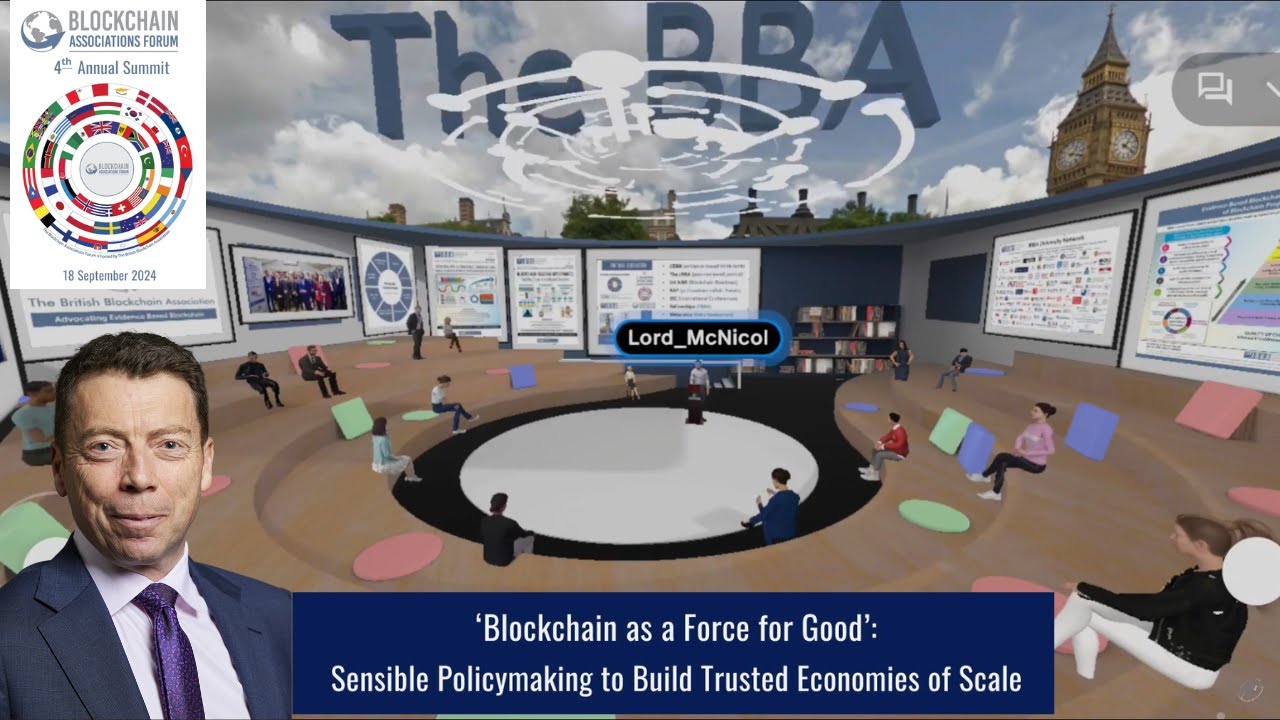
From the BBA video archive · 2021–2024

Parliamentary perspectives

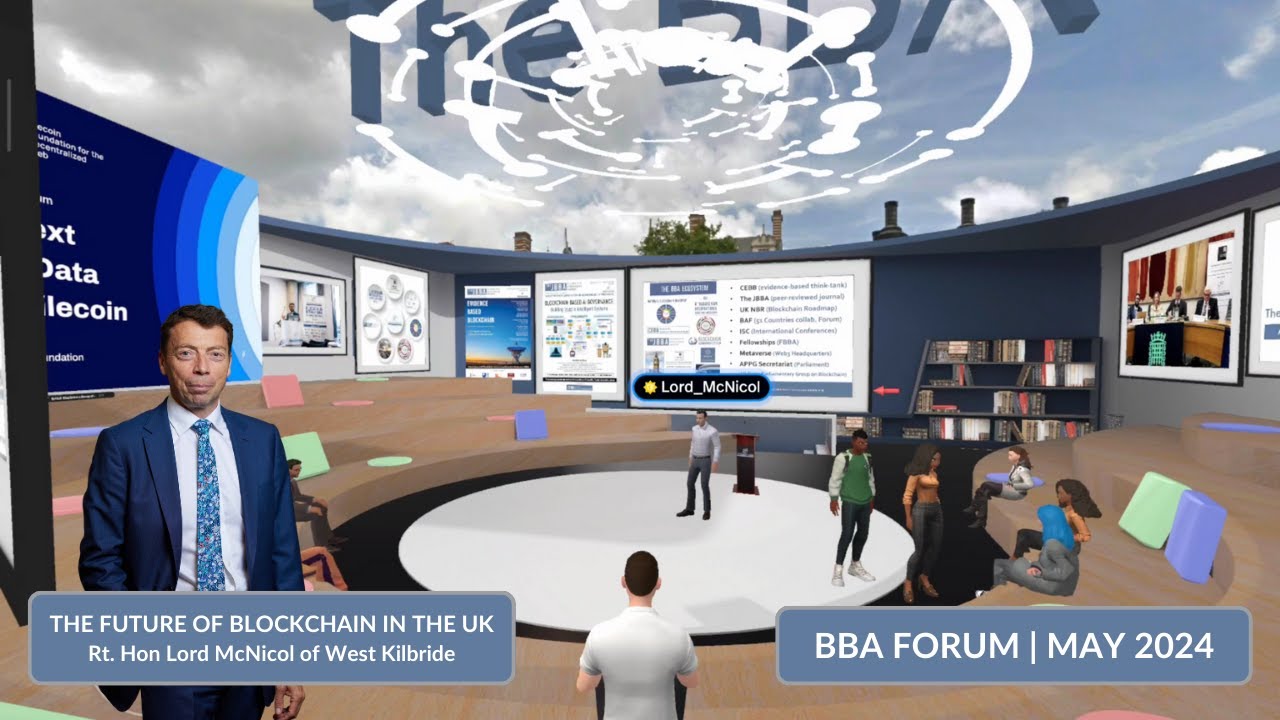
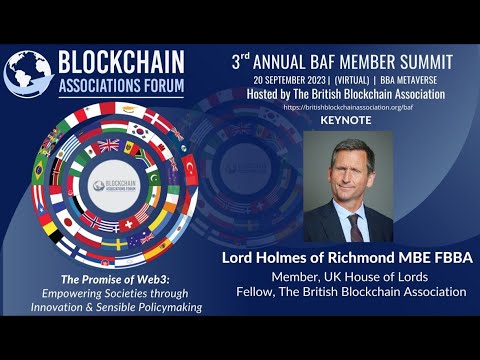
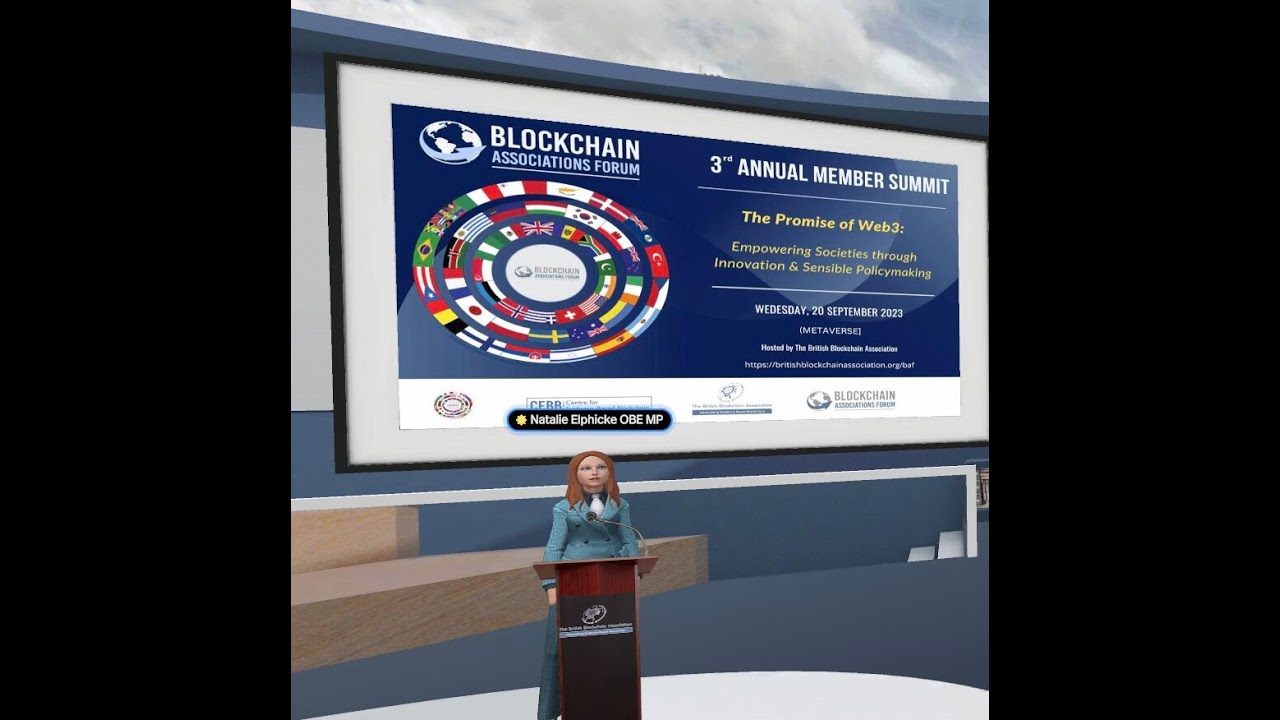
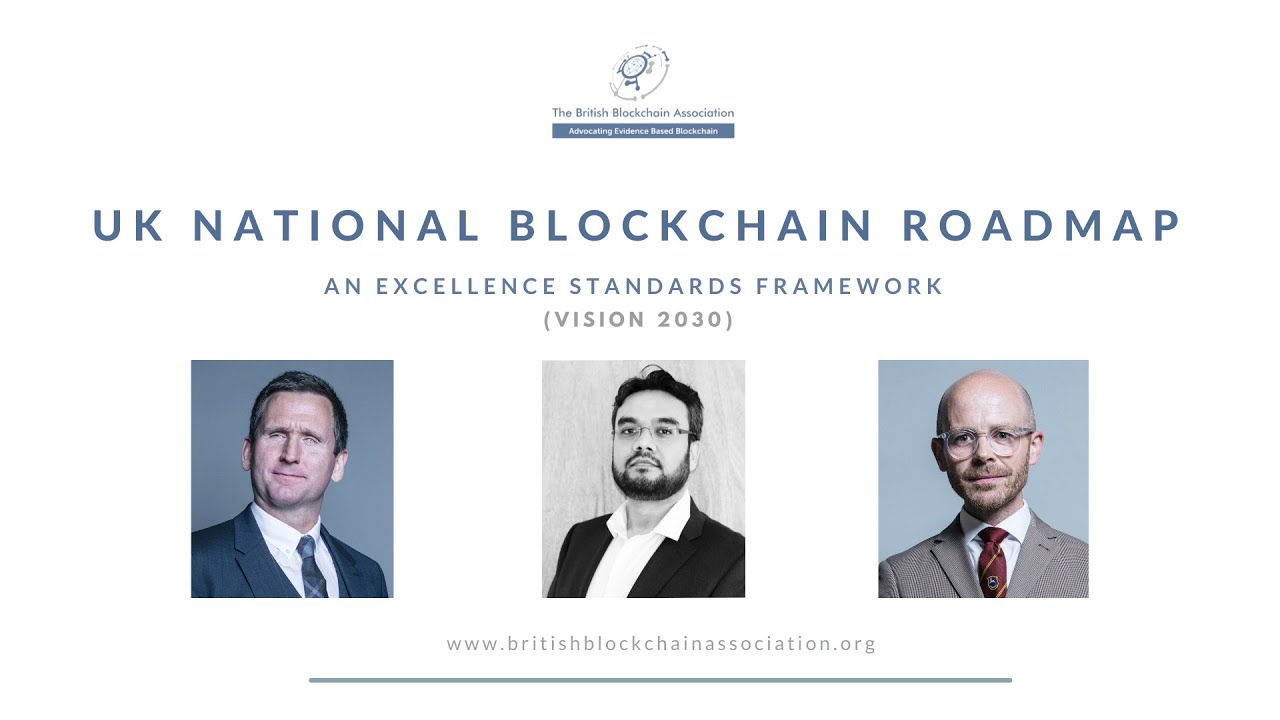
Explore the UK National Blockchain Roadmap and contributions from parliamentarians to BBA forums and the Blockchain Associations Forum. These historical recordings from 2021–2024 connect research, digital assets and public policy.
POLICY PRINCIPLES

What guides our policy work.

Evidence before assertionPolicy should be grounded in credible evidence and real-world outcomes.
Technology-neutral thinkingFocus on public value, market integrity and effective institutions rather than hype.
Cross-sector dialogueBring policymakers, researchers, regulators and industry into the same conversation.
Long-term national capabilityConsider skills, infrastructure, standards and institutional readiness together.